Introduction to Monsoon Infections in Children
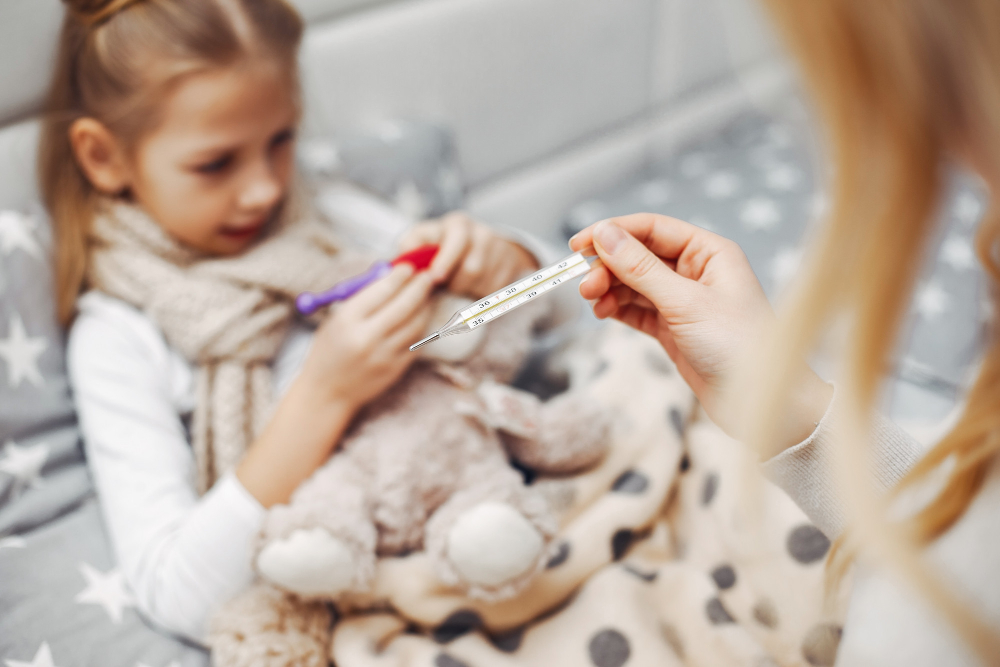
Monsoon infections in children are common during the rainy season. The wet weather creates a perfect environment for germs to grow. As a result, children often catch colds, fevers, and other illnesses. In India and other tropical countries, these infections rise sharply during monsoon months. Because children have weaker immune systems, they are at higher risk. Therefore, parents and caregivers must stay alert during this season.
Common Symptoms: Fever and Cold
During the monsoon, children may show several symptoms. Most often, they develop fever and cold. However, other signs can also appear. Watch for these common symptoms:
Sometimes, children may also have stomach pain or diarrhea. If symptoms last more than a few days, it is important to monitor your child closely.
Causes and Risk Factors During Monsoon
Monsoon weather increases the risk of infections in children. The main causes include:
Because children play outside and may not wash hands often, they are more exposed. In addition, schools and daycare centers can spread germs quickly. Therefore, extra care is needed during the rainy season.
When to See a Doctor: Warning Signs
Most monsoon infections in children are mild. However, some warning signs mean you should see a doctor right away. Look out for:
If you notice any of these, do not wait. Seek medical help as soon as possible. Early treatment can prevent serious problems.
Home Care and Prevention Tips
While some infections are hard to avoid, you can lower the risk. Here are some simple tips for home care and prevention:
Moreover, make sure your child gets enough rest and stays hydrated. These steps can help prevent many rainy season illnesses in children.
Treatment Options
Most monsoon infections in children get better with simple care. Doctors may suggest:
However, some cases need antibiotics or other medicines. Only a doctor should decide this. Never give over-the-counter drugs without advice. According to the World Health Organization (WHO) and the Centers for Disease Control and Prevention (CDC), correct treatment and early care are key for a quick recovery.
Frequently Asked Questions (FAQs)
1. Why do children get sick more often during the monsoon?
Because germs grow faster in wet weather, children are more exposed. Their immune systems are still developing, making them more likely to catch infections.
2. How can I prevent fever in kids during the rainy season?
Keep your child dry, use clean water, and encourage hand washing. Also, avoid crowded places when possible.
3. When should I see a doctor for my child’s cold?
If your child has trouble breathing, high fever, or symptoms last more than three days, see a doctor.
4. Are monsoon infections in India different from other places?
Some infections, like dengue and malaria, are more common in India due to the climate. However, basic prevention steps work everywhere.
5. Can I give my child antibiotics for a cold?
No, most colds are caused by viruses. Antibiotics only work for bacterial infections. Always consult a doctor before giving any medicine.
Conclusion and Call-to-Action
In summary, monsoon infections in children are common but often mild. With good care and early action, most kids recover quickly. However, watch for warning signs and do not delay medical help if needed. Consult a pediatrician at Bakhetia hospital for personalized advice if your child shows signs of monsoon infections.